You painted the house four years ago and the south wall is already flaking. The rest of it looks fine, which somehow makes it more annoying. Exterior paint peeling in New Jersey almost never happens because somebody bought cheap paint. It happens because something underneath the film was wrong before the first coat went on. Paint is a skin. It sticks to what it was applied to, and if that surface was damp, dirty, chalked, glossy, or bare, the bond was compromised from day one. The weather then does what weather does. It finds the weak spot and works on it every freeze and thaw cycle until the film lets go in sheets. The good news is that peeling tells you something specific if you know how to read it. Where it peels, how it peels, and what is underneath all point at a cause. This walks through the four things that actually produce it and how to figure out which one is happening on your house.
Moisture Is Almost Always the Real Cause
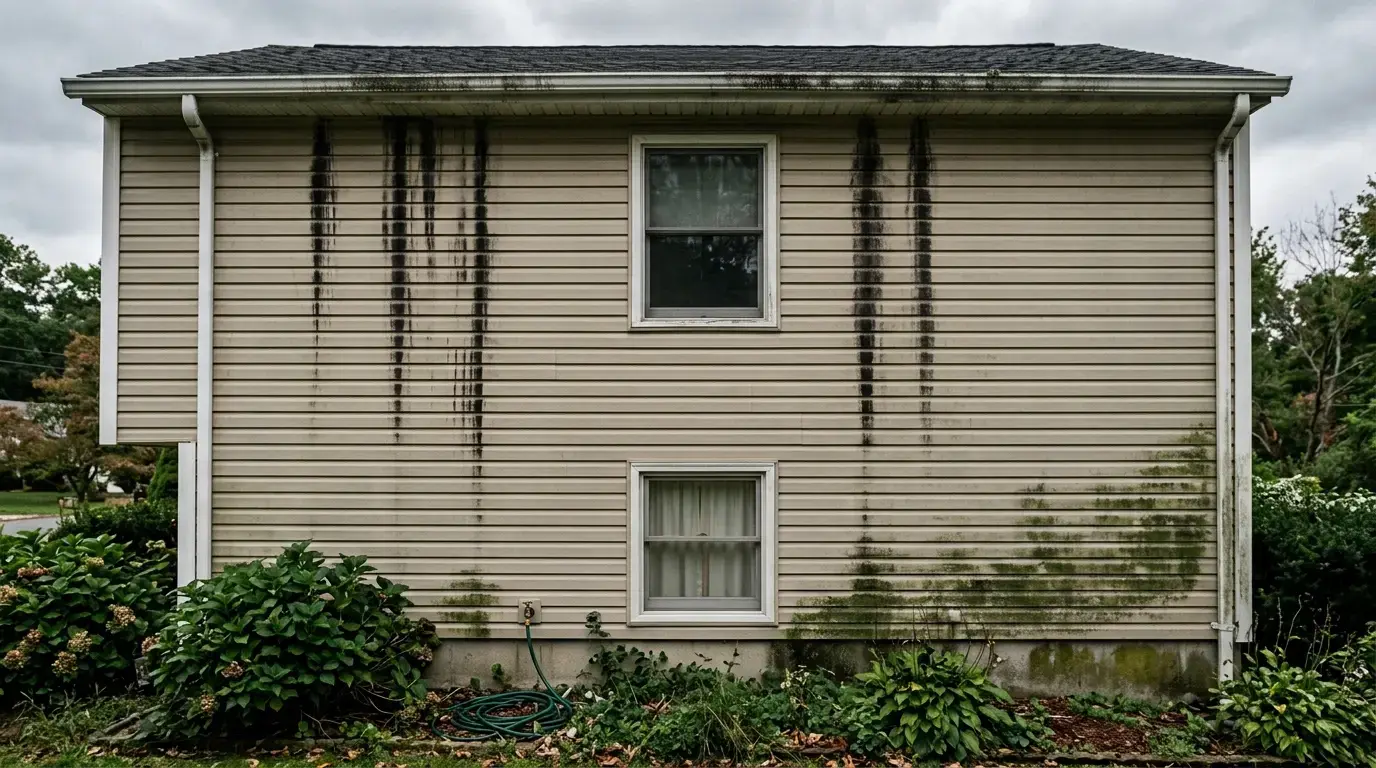
Water gets behind a paint film and pushes it off. That is the short version of most peeling you will ever see. The water can come from a failed caulk joint, a gutter that overflows onto the same three feet of siding every storm, a downspout dumping at the foundation, or interior humidity migrating out through the wall. It can also come from painting over siding that was still damp after a wash. If your peeling follows a vertical line under a gutter seam, or spreads out from a window corner, or sits low on a wall near a splash zone, you are looking at a water path, not a paint problem. Fixing the coating without fixing the water source buys you a season, maybe two, and then the same wall does the same thing again.
Prep Failures That Show Up a Year Later
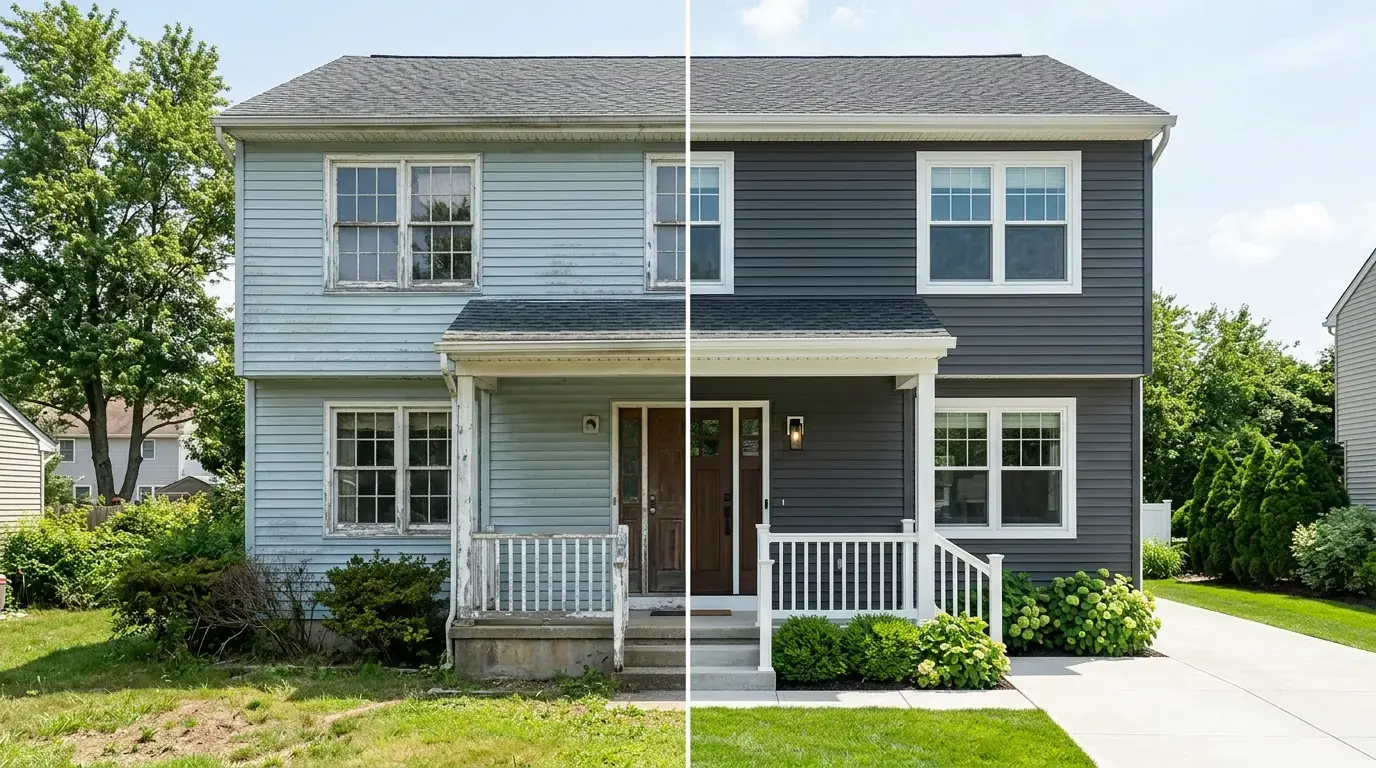
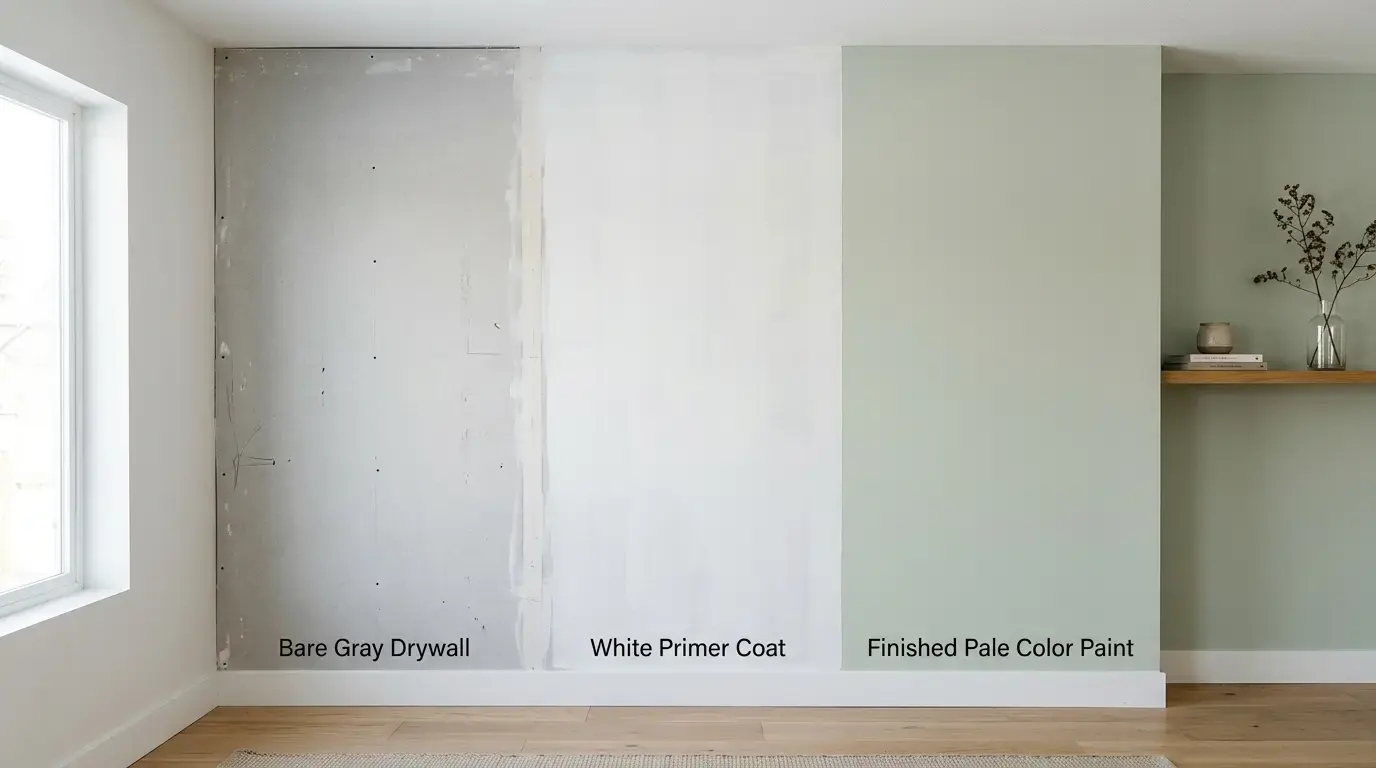
The second cause is prep somebody skipped. Paint does not bond to dirt, chalk, mildew, or glossy old enamel. If the siding was never washed, the coating stuck to a layer of grime and both of them came off together. If aluminum siding was chalked and nobody removed the chalk or primed over it, the paint bonded to a loose powder. If bare wood was never primed, the wood drank the first coat unevenly and the film sat thin in patches. None of this shows immediately. The wall looks great for a year. Then the film starts lifting at edges, usually where sun and moisture hit hardest, and it comes away in large flexible sheets rather than small brittle chips. That sheet pattern is the signature of an adhesion failure rather than age. A proper power washing before repainting removes those chalk and grime layers so the new coat actually bonds to the siding.
What New Jersey Weather Does to a Paint Film
New Jersey runs a real freeze and thaw cycle, and every cycle works on whatever moisture is already in or behind the siding. Water expands when it freezes. If it is sitting under a paint film, that expansion pushes the film off the substrate a fraction at a time all winter. Add humid summers that keep walls damp longer, plus salt air on the coastal towns, and a compromised coating gets tested constantly. Sun matters too. South and west elevations take far more ultraviolet than the north side, which is why so many houses have one wall failing while the others look acceptable. If your peeling is concentrated on the sunny side, exposure accelerated a weakness that was already there. Weather rarely creates the failure by itself. It finds the failure and finishes it.
Weather rarely creates the failure by itself. It finds the failure and finishes it.
How to Tell If You Need Repainting or Repair
Press on the peeling area. If the surrounding paint is firm and only the damaged section lifts, you may be looking at spot repair, scraping, feathering the edges, priming the bare spots, and recoating that elevation. If paint lifts easily several feet in every direction, the adhesion is gone across the whole wall and spot work is throwing money away. Check what is underneath. Bare wood that is soft, spongy, or darkened means rot, and rot is carpentry before it is painting. Also look at the pattern. Isolated failures near gutters and windows point at water intrusion you need to fix first. Widespread failure across a whole elevation points at prep. Our exterior painting and residential painting walkthroughs should tell you which of those you have before anybody quotes a number. Get a free estimate and we will take a look.