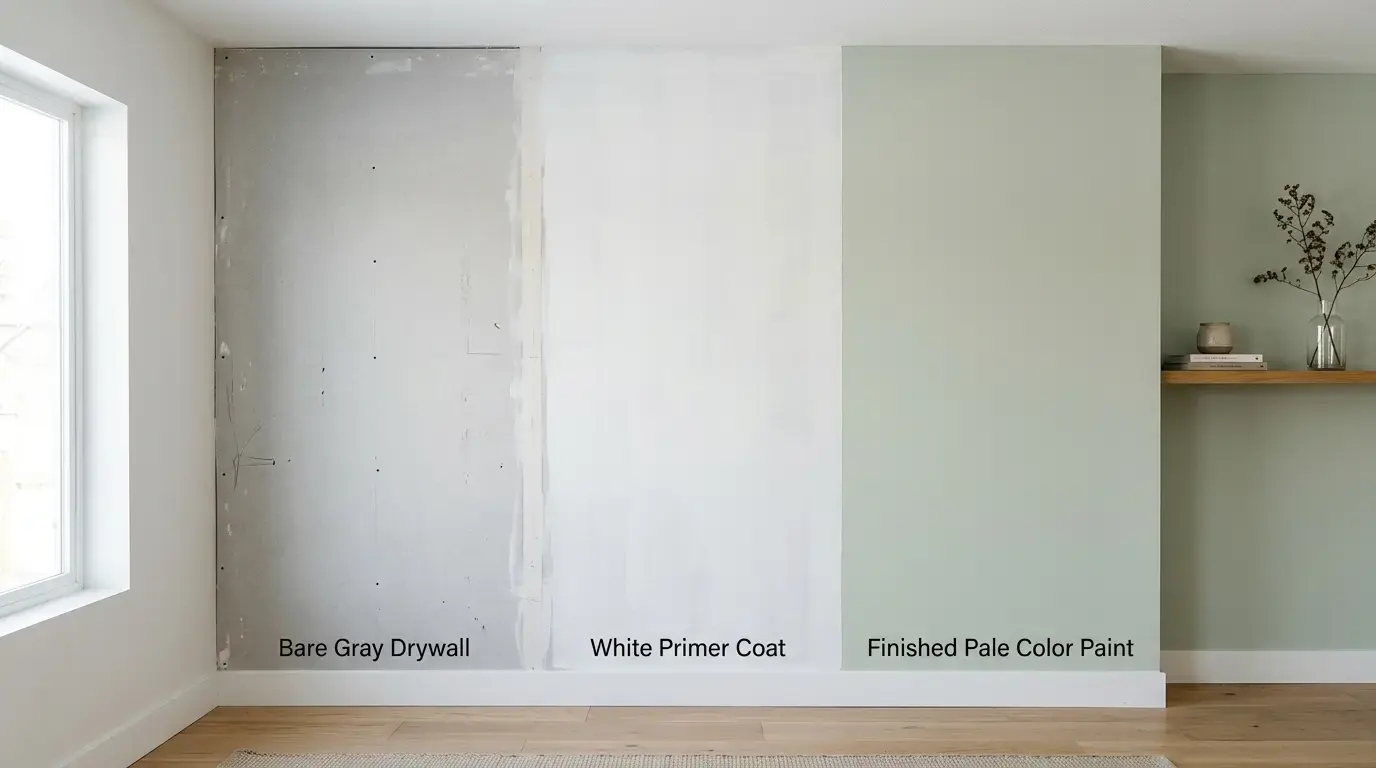
This is probably the most common question we get on an interior estimate, and the honest answer annoys people a little. How many coats of interior paint you need depends on what is already on the wall, what you are putting over it, and how the light hits the room. There is no universal number, but there is a default, and the default is two. Almost every wall gets two coats in a professional job, and there are specific situations where you need three or where one will genuinely do. The reason this matters is not stubbornness about process. Coats are labor, labor is most of the cost, and a contractor who quotes one coat is quoting a cheaper job that will look thin under afternoon light. Knowing which situation you actually have lets you read a quote properly and understand what you are comparing when two numbers are far apart.
Two Coats Is the Default and Here Is Why
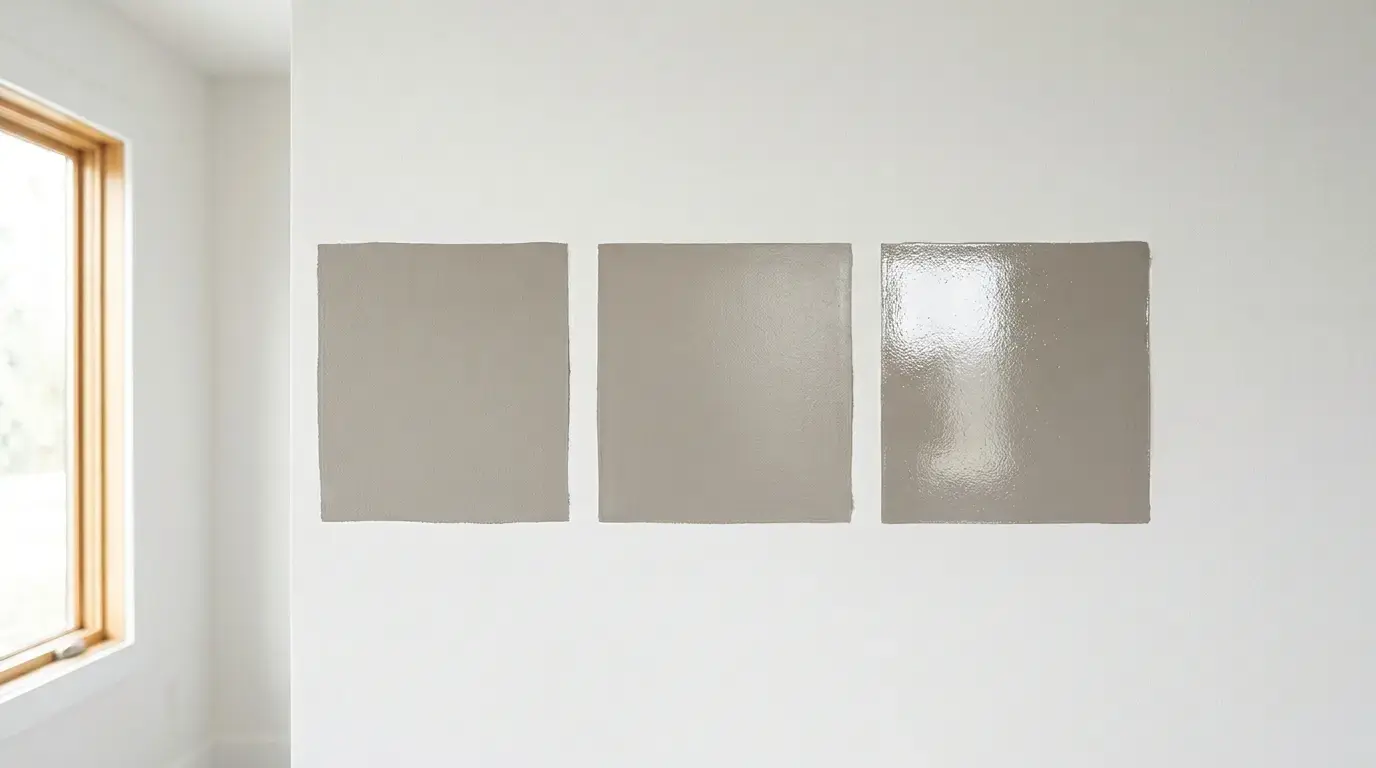
A single coat of paint goes on unevenly no matter how carefully it is applied. The roller loads and unloads across a wall, the surface absorbs at slightly different rates, and the film ends up thicker in some places than others. You do not see that as missed spots. You see it as a wall that looks slightly blotchy when sun crosses it at an angle, and you cannot un see it once you notice. The second coat evens out film thickness, which is what produces uniform color and consistent sheen. It also builds the durability that lets a wall be wiped down later without burnishing. Two coats is not a contractor upsell, it is the specification most manufacturers publish for their own products, and skipping it is the most common corner cut in residential painting.
When One Coat Is Genuinely Enough
There are real cases. If you are going over a sound, previously painted wall with the same color and the same product, one coat can refresh it acceptably. If the existing finish is in good condition, was properly applied, and you are making a very small color shift within the same family, one coat sometimes closes the gap. Touch ups on a recently painted wall are another. The catch is that all of those depend on the existing surface being in genuinely good shape with no patching, no repairs, and no sheen change. The moment there is a patch, a repair, or a jump from flat to satin, you are back to two. If a contractor tells you one coat will do, ask which of those conditions your wall meets.
When You Need Three, or a Tinted Primer Instead
Deep and saturated colors are the main reason. Going from a burgundy dining room or a navy accent wall to anything light usually takes three coats of finish paint, sometimes four, because the old pigment keeps ghosting through. Strong reds, oranges, and yellows are also difficult in the other direction, since those pigments have less hiding power and need more build to reach full color. In both cases a tinted primer is cheaper and produces a better result. One coat of primer tinted toward the new color, then two finish coats, covers more evenly and costs less than four coats of finish paint fighting what is underneath. A quote that anticipates this before starting is a quote written by somebody who looked at your walls.
A quote that anticipates this before starting is a quote written by somebody who looked at your walls.
What One Coat Coverage Claims Actually Mean
Paint marketed as one coat coverage is usually a thicker, higher solids product that does cover better than standard paint in ideal conditions. Ideal conditions means a properly primed, uniform, similarly colored surface with no repairs. That is a real product improvement and it is also a laboratory scenario. On an actual wall with patched nail holes, a sheen change, and afternoon sun raking across it, that same product benefits from a second coat exactly like any other. Treat the claim as a statement about the paint's quality rather than a promise about your specific room. If a contractor is using it to justify a one coat quote on a wall with repairs, they are borrowing a marketing claim to explain a scope decision. Our interior painting, residential painting, and commercial painting quotes spell out the coat count before anything starts. Get a free estimate and we will walk the rooms with you.